

Top 10 Foods for Healthy Glowing Skin

When your skin looks dull, uneven, or tired, it's tempting to reach straight for a new serum. But skincare products are only half the picture — what you eat plays a real role in keeping your skin healthy and glowing, too. Your skin needs a steady supply of nutrients like vitamin C, vitamin E, carotenoids, healthy fats, protein, and water to support its structure, repair itself, and defend against everyday damage.
That doesn't mean any single food can erase dark spots, fade a tan overnight, or change your natural skin tone — no food works like a bleaching cream. Skin brightening through diet is really about supporting healthier skin over time, while reducing the internal factors that contribute to dullness and uneven pigmentation.
Quick answer: the best foods for glowing skin are those rich in vitamin C (citrus, berries, bell peppers), carotenoids (carrots, tomatoes, leafy greens), vitamin E (nuts, seeds, avocado), and omega-3 fatty acids (fatty fish). A varied, colorful diet supports collagen production, antioxidant protection, and hydration — all of which contribute to a more radiant complexion over time. No single food replaces sunscreen or a proper skincare routine.
Why Diet Matters for Skin Health

Your skin is a living organ that's constantly renewing itself. Nutrients from food feed into the processes behind collagen production, antioxidant protection, barrier function, and skin cell turnover. A balanced diet can't replace sunscreen or targeted pigmentation treatment, but good nutrition helps build the foundation healthy skin depends on — supporting your skin from the inside.
Antioxidant-rich foods are especially useful here. Your body is under constant oxidative stress from ordinary metabolism and from environmental exposure — UV radiation and pollution being the two biggest contributors. Foods containing vitamin C, vitamin E, carotenoids, and other plant compounds help supply the antioxidants your body uses to protect skin cells from that load, including UV-induced skin stress.
Hydration matters too. Dehydrated skin tends to look duller and can make fine lines and uneven texture more noticeable. Water-rich foods help keep skin hydrated by contributing to your overall fluid intake, though they don't replace the need to drink enough fluids throughout the day.
Top 10 Foods for Glowing Skin to Add to Your Diet

These 10 foods show up consistently in nutrition research on skin-supportive eating — not because any one of them is magic, but because together they cover the core nutrients that keep your skin healthy.
1. Oranges and Other Citrus Fruits
Oranges, lemons, grapefruit, and other citrus fruits are well known for their vitamin C content. Vitamin C plays a role in normal collagen formation and also functions as an antioxidant.
Try an orange as a snack, add lemon to meals, or mix citrus into a balanced breakfast.
Important: eating citrus isn't the same as applying lemon juice to your face. Undiluted lemon juice can irritate skin and increase sun-exposure risk — it's not a safe DIY facial brightener.
2. Berries
Strawberries, blueberries, blackberries, and other berries provide vitamin C along with a wide range of plant compounds that help protect your skin, making them a genuinely useful part of a skin-supportive eating pattern.
Add them to oatmeal, yogurt, or smoothies, or eat them on their own.
Fresh or frozen both work — frozen berries retain most of their nutritional value.
3. Tomatoes
Tomatoes contain vitamin C and carotenoids, including lycopene — an antioxidant compound studied for its role in helping protect skin against sun damage from oxidative stress.
Use them in salads, soups, sauces, sandwiches, or cooked dishes.
Cooking changes the availability of some carotenoids, so both fresh and cooked tomatoes have a place in a varied diet.
4. Carrots and Other Orange Vegetables
Carrots, pumpkin, and sweet potatoes are rich in carotenoids like beta-carotene, which the body can convert into vitamin A — a nutrient involved in normal skin and immune function.
Roast, steam, or add them to soups and grain bowls for an easy nutrient boost.
Their color makes them one of the simplest ways to add carotenoids without complicated prep.
5. Leafy Green Vegetables
Spinach, kale, and other leafy greens supply vitamins C and E, folate, carotenoids, and other plant compounds — a practical way to raise the overall nutrient density of your diet and support skin repair.
Add them to soups, curries, salads, omelets, wraps, or smoothies.
Mixing several vegetables together is more useful than relying on one 'beauty food.'
6. Avocado
Avocado is rich in healthy fats, mainly monounsaturated fats, along with vitamin E and other nutrients. Healthy fats support a balanced diet and help you absorb fat-soluble nutrients from the foods you eat alongside them.
Use it in salads, sandwiches, on toast, or in bowls.
It's energy-dense, so portion size still matters even though it fits easily into a balanced diet.
7. Nuts and Seeds
Almonds, sunflower seeds, walnuts, chia seeds, and flaxseeds each bring a different mix of vitamin E, healthy fats, minerals, fiber, and plant compounds — vitamin E in particular is an antioxidant that helps guard against damage to skin cells from oxidative stress.
Add them to oatmeal, yogurt, salads, or eat as a snack.
Choose minimally processed, unsalted options when you can.
8. Fatty Fish
Salmon, sardines, mackerel, and other fatty fish provide omega-3 fatty acids and high-quality protein. Omega-3s are important structural components of cell membranes and play a role in normal inflammatory skin processes.
Aim to include fatty fish regularly as part of a balanced diet.
It supports overall health, which in turn supports the nutritional foundation your skin depends on.
9. Eggs
Eggs provide high-quality, complete protein along with several micronutrients. Protein matters here because skin itself is built from structural proteins like collagen and keratin.
A convenient breakfast or meal ingredient on its own.
Pair with vegetables and whole grains for a more balanced meal rather than relying on eggs alone.
10. Green Tea
Green tea contains polyphenols, including catechins such as EGCG — compounds with antioxidant properties that have been studied for their potential relationship with skin health.
Enjoy it unsweetened as part of your regular beverage rotation.
It's a nice addition, not a replacement for water, a balanced diet, or sun protection.
Other Nutrient-Rich Foods That Support Skin Health
The 10 foods above are useful starting points, but variety is the bigger goal. These nutrient-rich foods are worth rotating in too:
. Bell peppers - especially useful for vitamin C
. Kiwi - provides vitamin C and other nutrients
. Guava - a vitamin C-rich fruit
. Broccoli - provides vitamin C, carotenoids, and fiber
. Beans and lentils - provide protein, minerals, and fiber
. Plain yogurt - provides protein and other nutrients
. Whole grains - provide complex carbohydrates, fiber, and micronutrients
. Water-rich fruits and vegetables - contribute to overall fluid intake
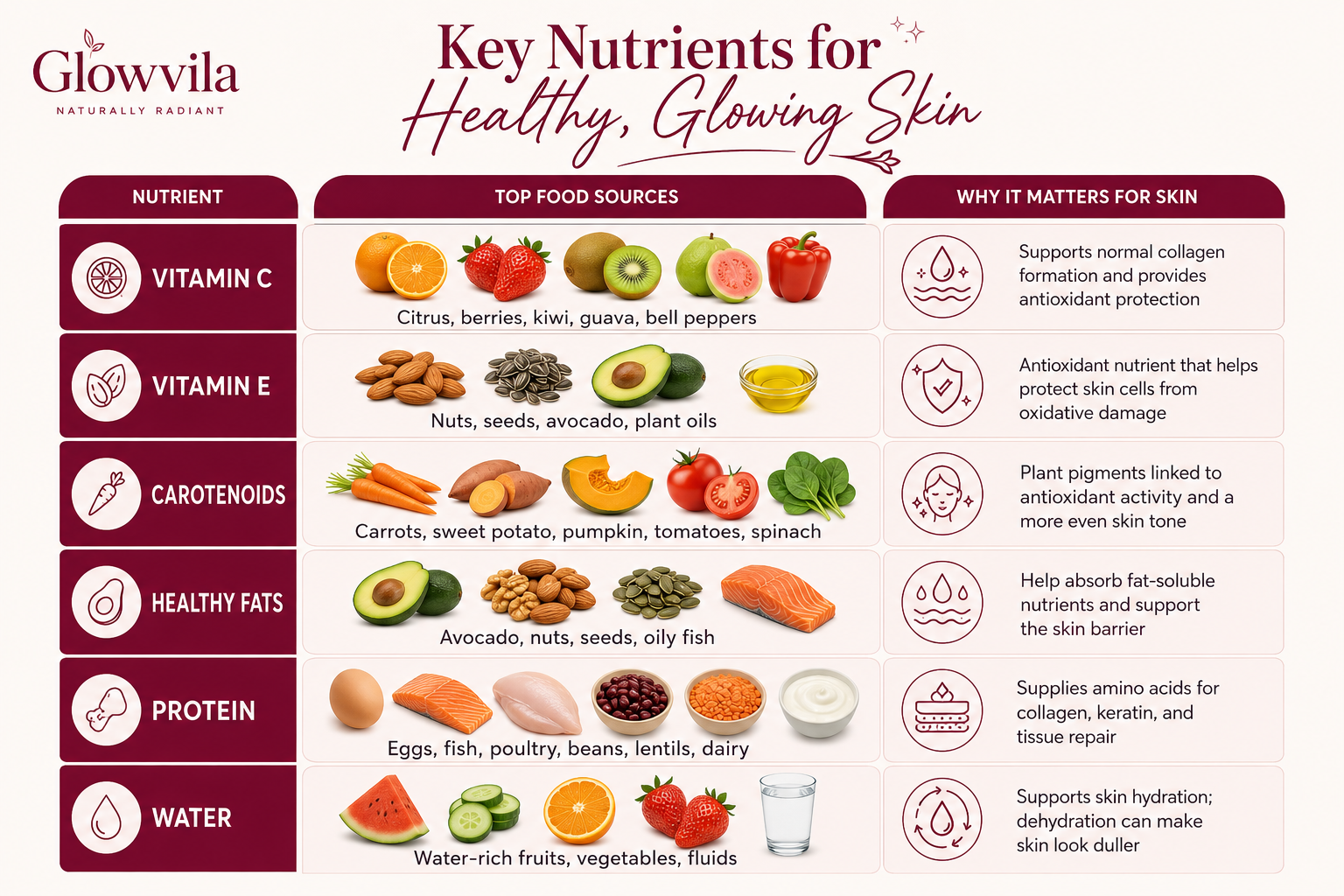
Rather than chasing individual 'superfoods,' it helps to think in terms of the nutrients doing the actual work — and where to reliably find them:
Not by themselves. Diet can support overall skin health, but it can't reliably remove established hyperpigmentation or instantly reverse a suntan.
A tan develops because skin produces more melanin in response to UV exposure. The single most important step for protecting skin cells from sun damage and preventing worsening pigmentation is consistent sun protection. For persistent dark spots, targeted skincare ingredients or a professional treatment are usually more appropriate, depending on the underlying cause.
Think of food as the foundation, not the treatment: the right foods support your skin, while sunscreen and the right skincare routine handle the external factors.
There's no single list of foods everyone needs to avoid completely for better skin. But an eating pattern dominated by highly processed foods, excess added sugar, and nutrient-poor snacks makes it harder to meet your nutritional needs overall.
Instead of labeling individual foods as 'bad,' focus on balance. Make nutrient-dense foods the regular foundation of your diet to support long-term skin health, and keep the highly processed treats as occasional choices rather than daily staples.
You don't need a complicated plan to support your skin — a simple day could look like this:
. Breakfast: eggs with whole-grain toast, spinach, and a serving of berries or orange
. Snack: a small handful of almonds and a piece of fruit
. Lunch: lentils or grilled fish with leafy greens, tomatoes, carrots, and a whole grain
. Snack: plain yogurt with berries or kiwi
. Dinner: salmon or beans with cooked vegetables and a whole grain or potato
. Drinks: water throughout the day, with unsweetened green tea if you enjoy it
This is only an example. Your ideal diet depends on your age, activity level, dietary preferences, allergies, medical needs, and overall calorie and nutrient requirements.

Usually, food should come first. A varied diet typically supplies most of the nutrients associated with healthy skin without needing to supplement.
Supplements aren't a shortcut to brighter skin, and taking high doses of vitamins or minerals without a clear reason can be unnecessary or even harmful. If you suspect a nutrient deficiency or have dietary restrictions that make it hard to meet your needs, talk to a qualified healthcare professional before starting any supplement.
Diet works best as one part of a bigger approach — pair it with consistent skin protection and a simple routine:
. Eat a varied diet with plenty of colorful fruits and vegetables
. Include a source of protein in regular meals
. Choose healthy fats such as nuts, seeds, avocado, and oily fish
. Drink enough fluids for your individual needs
. Use broad-spectrum sunscreen consistently during daylight exposure
. Avoid harsh DIY brightening remedies that can irritate skin
. Use targeted skincare ingredients when appropriate for your specific concern
Common Myths About Foods for Glowing Skin
Myth 1: One Food Can Make Your Skin Fairer
No single food can safely change your natural skin tone or give you a glowing complexion on its own. A healthy diet supports skin function — it doesn't override your genetics.
Myth 2: Lemon Water Removes Pigmentation
Lemon water can be a pleasant way to get fluids and vitamin C, but it doesn't directly erase pigmentation. Lemon juice also shouldn't be used as a facial bleaching treatment — applied directly, it can irritate skin and increase sun sensitivity.
Myth 3: More Antioxidants Always Mean Better Skin
Antioxidants matter, but more isn't automatically better. A balanced diet with many different foods is more sensible than loading up on one nutrient in excess.
Myth 4: Expensive 'Beauty Foods' Are Necessary
You don't need exotic superfoods for healthy and glowing skin. Everyday foods — tomatoes, carrots, spinach, oranges, eggs, beans, nuts, and fish — provide the nutrients that actually matter.
Frequently Asked Questions
Everything you need to know before starting your skincare journey.
Skin-brightening foods are best viewed as part of a healthy lifestyle, not a quick fix for pigmentation. Citrus fruits, berries, tomatoes, colorful vegetables, leafy greens, avocado, nuts, seeds, fatty fish, eggs, and green tea all provide nutrients that support skin health.
The goal isn't to find one magical food. Build a varied diet, stay adequately hydrated, protect your skin from the sun, and use a skincare routine suited to your skin type and concerns. Radiant skin is usually the result of consistent habits, not one ingredient or one meal.