

Sun Tan vs Sunburn: What’s the Difference & How to Treat Both

If you've ever come back from a beach day with darker, warmer-looking skin and wondered, "Is this a tan or a burn?" you're not alone. It's one of the most searched skin questions every summer, and for good reason: a tan and a sunburn can look similar in the first few hours, but they are completely different skin reactions with completely different treatments.Treating a sunburn like a tan (or ignoring it because you think it'll "just turn into a tan") can make things worse more peeling, more damage, and a longer recovery. In this guide, we'll break down exactly what's happening to your skin cells in each case, how to tell tans and sunburns apart, and how to treat both safely at home.
. What Is a Suntan? How Sun Exposure Affects Your Skin
. What Is a Sunburn? Understanding Sun Damage
. Can a Sunburn Turn Into a Tan?
. Best Treatment for a Suntan and Sun-Damaged Skin
. Best Treatment for Sunburn Relief
. Herbal Skincare Remedies for Suntan and Sunburn
. Prevention Tips: How to Protect Your Skin From Sun Damage and Skin Cancer
. Frequently Asked Questions
What Is a Suntan? How Sun Exposure Affects Your Skin
A sun tan is your skin's natural defense mechanism against ultraviolet (UV) radiation a suntan is a protective response, not damage in the way a burn is.
How Tanning Happens: The Role of Melanin
When your skin is exposed to ultraviolet light, it triggers cells called melanocytes to produce more melanin, the pigment responsible for skin color. This is your skin's built-in reaction to ultraviolet exposure: extra melanin is produced to darken the skin and act as a natural shield, absorbing UV rays before they damage the deeper layers. By increasing the production of melanin, your body works to protect deeper layers of skin from UV damage. Tanning typically develops gradually over repeated, moderate sun exposure.
Signs of a Tan on Your Skin
Skin gradually darkens over hours to days.
Even, uniform color change across areas exposed to UV light.
No pain, stinging, or heat coming off the skin.
Skin still feels smooth and normal to the touch.
No blistering or swelling.
Is Tanning Permanent?
No. A tan is temporary. As your skin naturally exfoliates and renews itself (a process that takes about 3–4 weeks), the tanned, pigmented skin cells shed and new skin replaces them with your natural skin tone. Tans fade faster with regular exfoliation, hydration, and reduced sun exposure but there's no way to make a tan disappear overnight, despite what many "quick fix" remedies claim. It's also worth remembering that even a "healthy tan" reflects some UV damage, so ongoing sun protection still matters.
What Is a Sunburn? Understanding Sun Damage
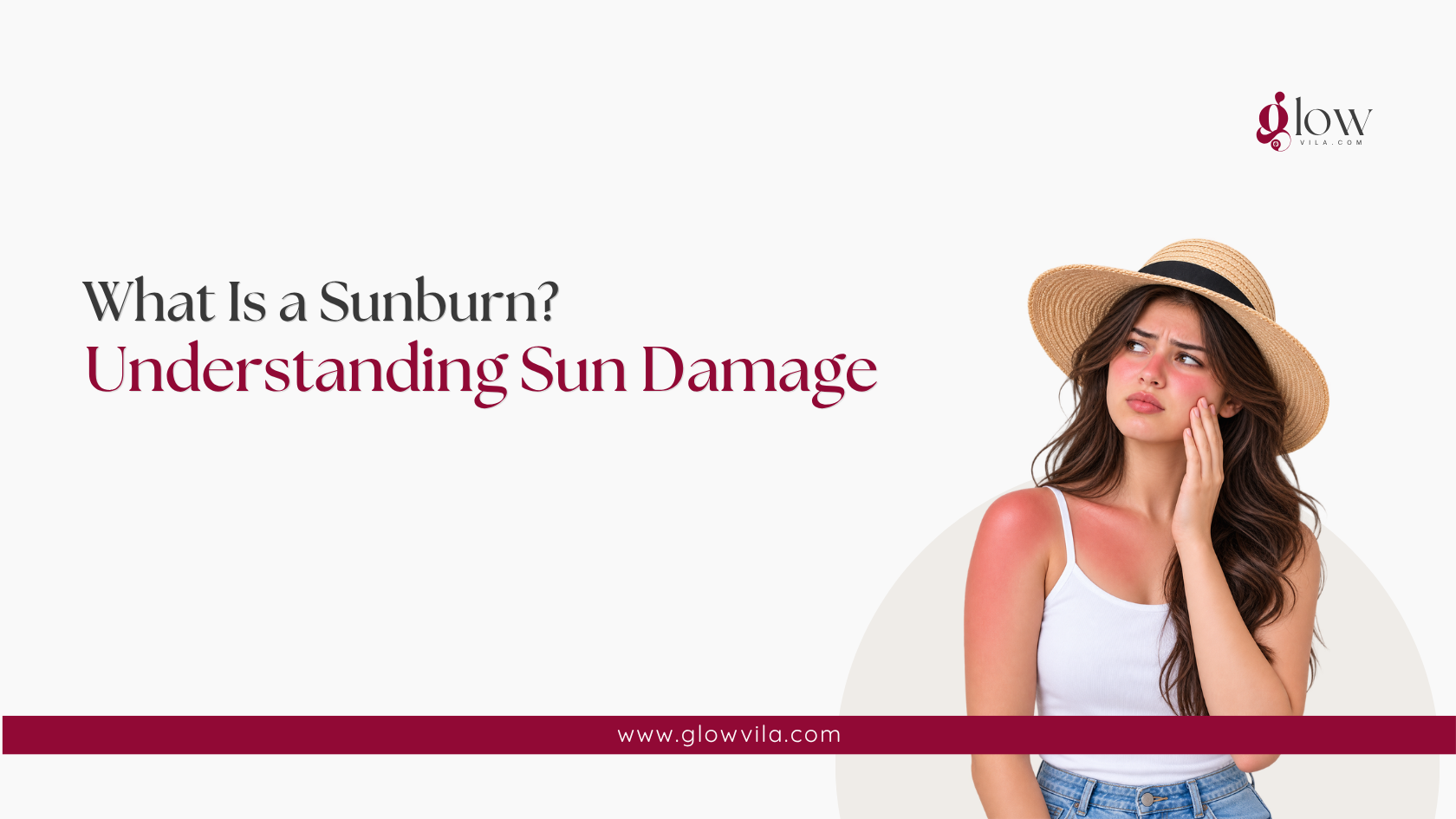
A sunburn is actual skin damage. It happens when too much UV exposure overwhelms your skin's melanin defenses and directly damages skin cells essentially an inflammatory injury, similar to a burn from heat. When your skin is exposed to too much UV radiation, the DNA damage inside those cells is what causes sunburn.
Red, hot skin that appears within a few hours of exposure.
Pain, tenderness, or stinging to the touch
Swelling in more severe cases.
Blisters in more serious burns.
Skin that feels tight or warm.
Peeling as the damaged skin heals (usually a few days later).
In severe cases: chills, fever, headache, nausea (sun poisoning).
Seek medical care ideally from a dermatologist if a sunburn involves large blisters, covers a large area of the body, or comes with fever, chills, confusion, dizziness, signs of dehydration, or intense pain that doesn't improve with home care. A severe sunburn in infants under one year old should always be evaluated by a doctor.
This is one of the most common myths and it's only partly true. Once a sunburn heals and the sunburned skin peels away, the new skin underneath may appear slightly darker if melanin production was also triggered during the same UV exposure. But this isn't the sunburn itself "turning into" a tan it's a separate tanning response happening in the undamaged skin around and beneath the burn. The burn itself always needs to heal first, because damage has occurred at the cell level; there's no way to skip that step by tanning over it.
Best Treatment for a Suntan and Sun-Damaged Skin
Once you've confirmed it's a tan and not a burn, the goal of your skincare is to gently fade pigmentation and support skin renewal.
Aloe soothes skin and provides light hydration, helping the skin barrier recover faster from sun exposure.
Contains lactic acid, a mild natural exfoliant that can help lift dead, pigmented skin cells over time.
Tomatoes are often claimed to "remove" tan instantly due to their acidity, but there's no strong evidence they lighten melanin and the acidity can irritate sensitive or sun-exposed skin.
A well-studied skincare ingredient shown to even out skin tone and reveal lighter skin with consistent use.
The single most important step reapplying SPF prevents new tanning while the existing tan fades naturally.
For a complete step-by-step routine including which products to use, how long tan removal actually takes, and mistakes to avoid, see our full guide to removing a sun tan naturally.
Best Treatment for Sunburn Relief
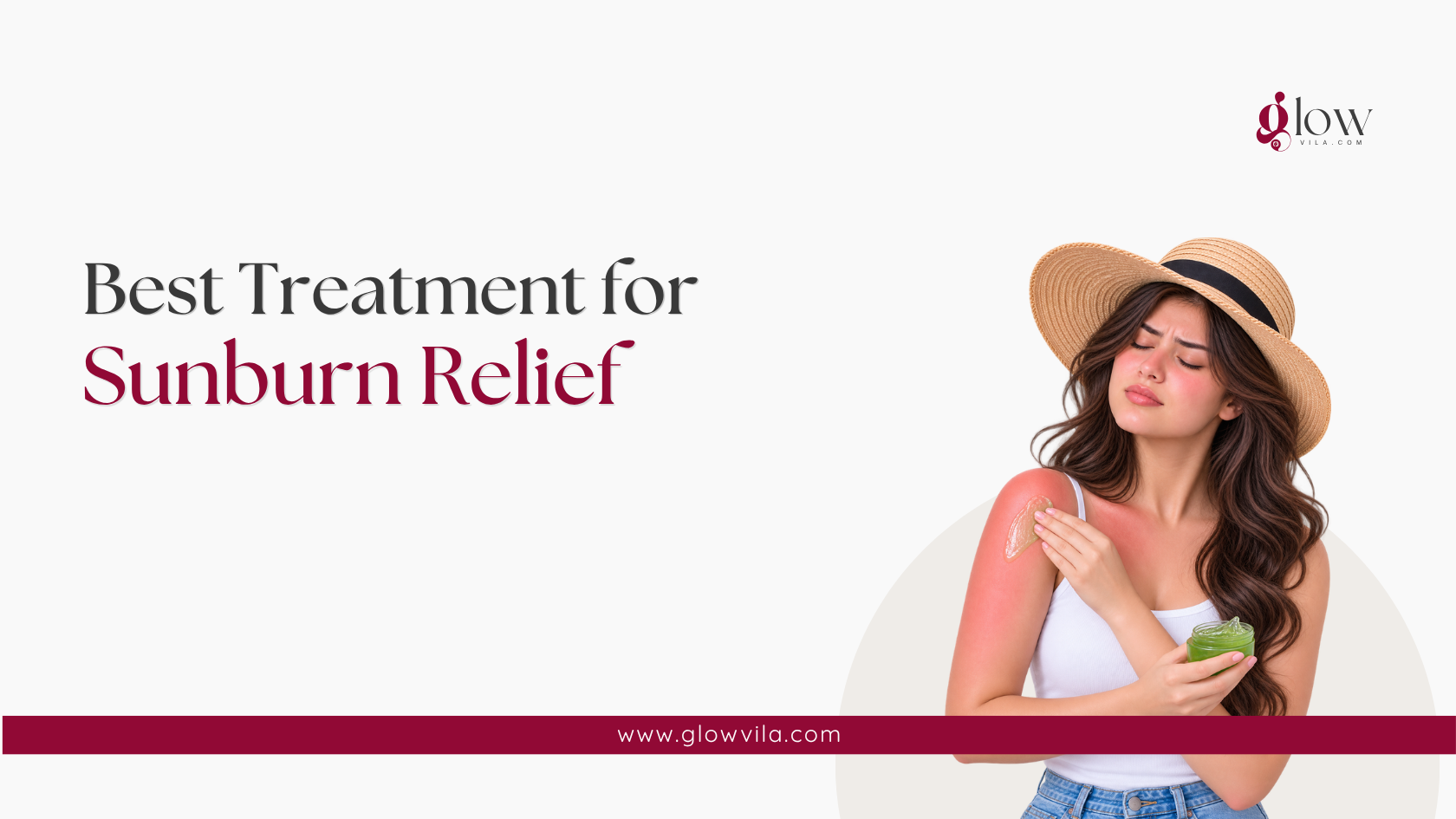
Sunburn needs immediate, gentle care to reduce pain and inflammation and support healing never exfoliation or harsh actives. These steps also offer real sunburn relief while your skin works to repair the damage.
Apply a cool, damp cloth to the skin for 10–15 minutes at a time to reduce heat and swelling.
Pure aloe vera gel calms inflammation and provides a protective, hydrating layer over damaged skin.
Sunburn draws moisture to the skin's surface, so drink plenty of water and use a fragrance-free moisturizer to protect your skin and prevent dryness and peeling.
Over-the-counter hydrocortisone cream can reduce inflammation and redness, while pain relievers like ibuprofen help with discomfort and swelling useful even for a mild sunburn.
Herbal Skincare Remedies for Suntan and Sunburn
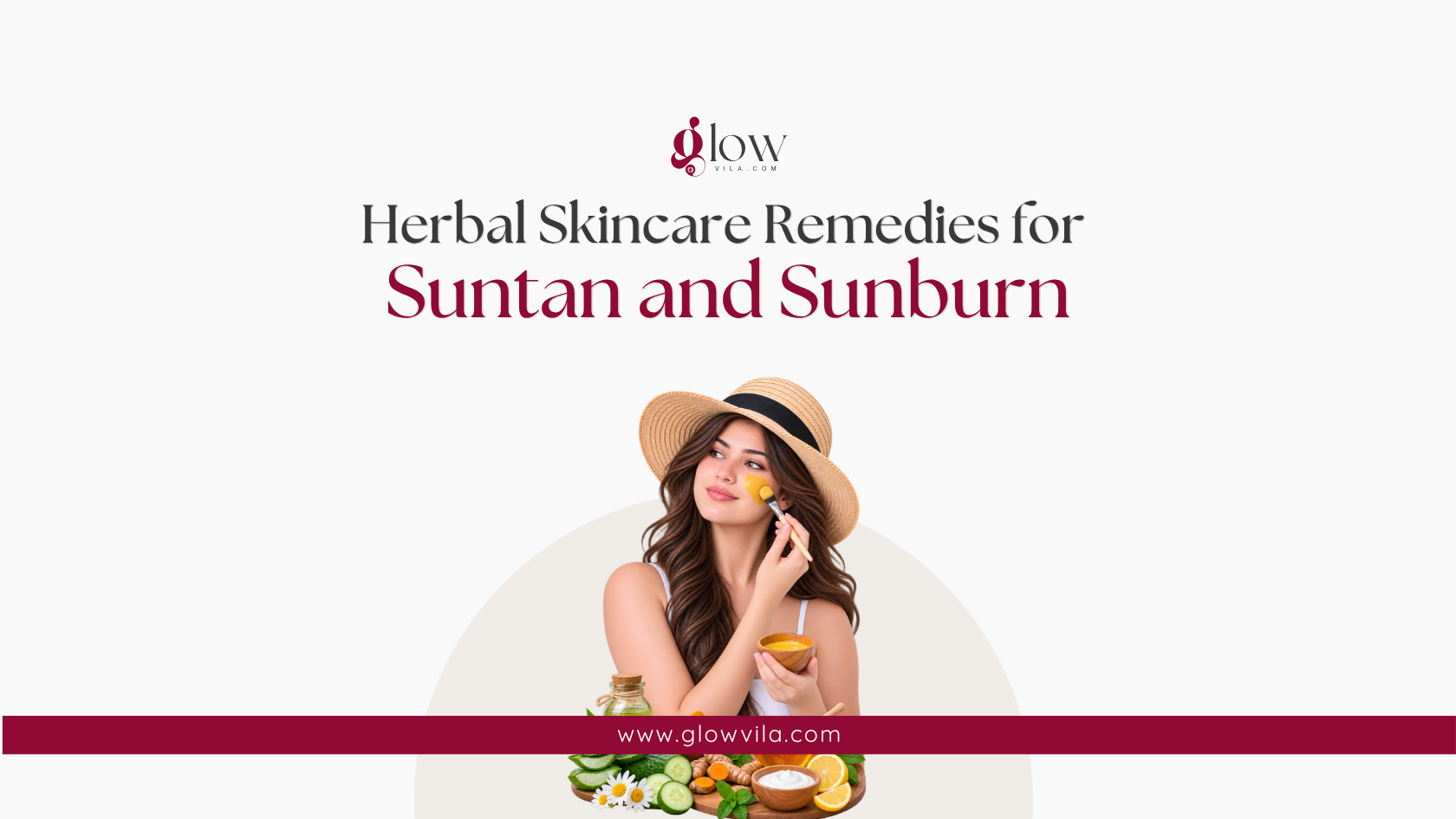
Alongside conventional care, several herbal ingredients have long been used to soothe sun-exposed skin:
Traditionally used to cool the skin and reduce redness; mix sandalwood powder with rosewater for a soothing paste that can calm delicate skin.
Naturally cooling and hydrating; chilled cucumber slices or juice can calm irritated, sun-exposed skin.
Known for its anti-inflammatory properties; a small amount mixed into a mask may help reduce redness (patch test first, as it can stain skin temporarily).
Rich in antioxidants; cooled green tea bags or a green tea compress can ease sunburn discomfort.
Has calming, anti-inflammatory properties; a cooled chamomile tea rinse can soothe sensitive, sun-damaged skin.
As with any home remedy, patch-test on a small area first, especially on broken or blistered skin.
Good sun protection is the best way to lower your long-term skin risks, because repeated UV damage can increase your risk of skin cancer and premature aging.
Apply a broad-spectrum SPF 30+ sunscreen 15–20 minutes before sun exposure, and reapply every 2 hours a high sun protection factor shields against both UVA and UVB rays.
Wear protective clothing that's lightweight and breathable, plus hats and sunglasses, during peak UV hours (10 AM–4 PM) to reduce eye damage and shield exposed skin.
Seek shade whenever possible, especially during extended outdoor activities.
Stay hydrated before and during sun exposure.
Avoid tanning beds, which carry similar UV risks as direct sun exposure and raise your skin cancer risk.
Check the daily UV index and adjust your plans for daily sun accordingly.
Making sunscreen part of your everyday skin care wearing sunscreen every day, even in winter is one of the simplest ways to protect your skin from UV over a lifetime.
Wear protective clothing that's lightweight and breathable, plus hats and sunglasses, during peak UV hours (10 AM–4 PM) to reduce eye damage and shield exposed skin.
Seek shade whenever possible, especially during extended outdoor activities.
Stay hydrated before and during sun exposure.
Avoid tanning beds, which carry similar UV risks as direct sun exposure and raise your skin cancer risk.
Check the daily UV index and adjust your plans for daily sun accordingly.
Making sunscreen part of your everyday skin care wearing sunscreen every day, even in winter is one of the simplest ways to protect your skin from UV over a lifetime.
Frequently Asked Questions
Everything you need to know before starting your skincare journey.